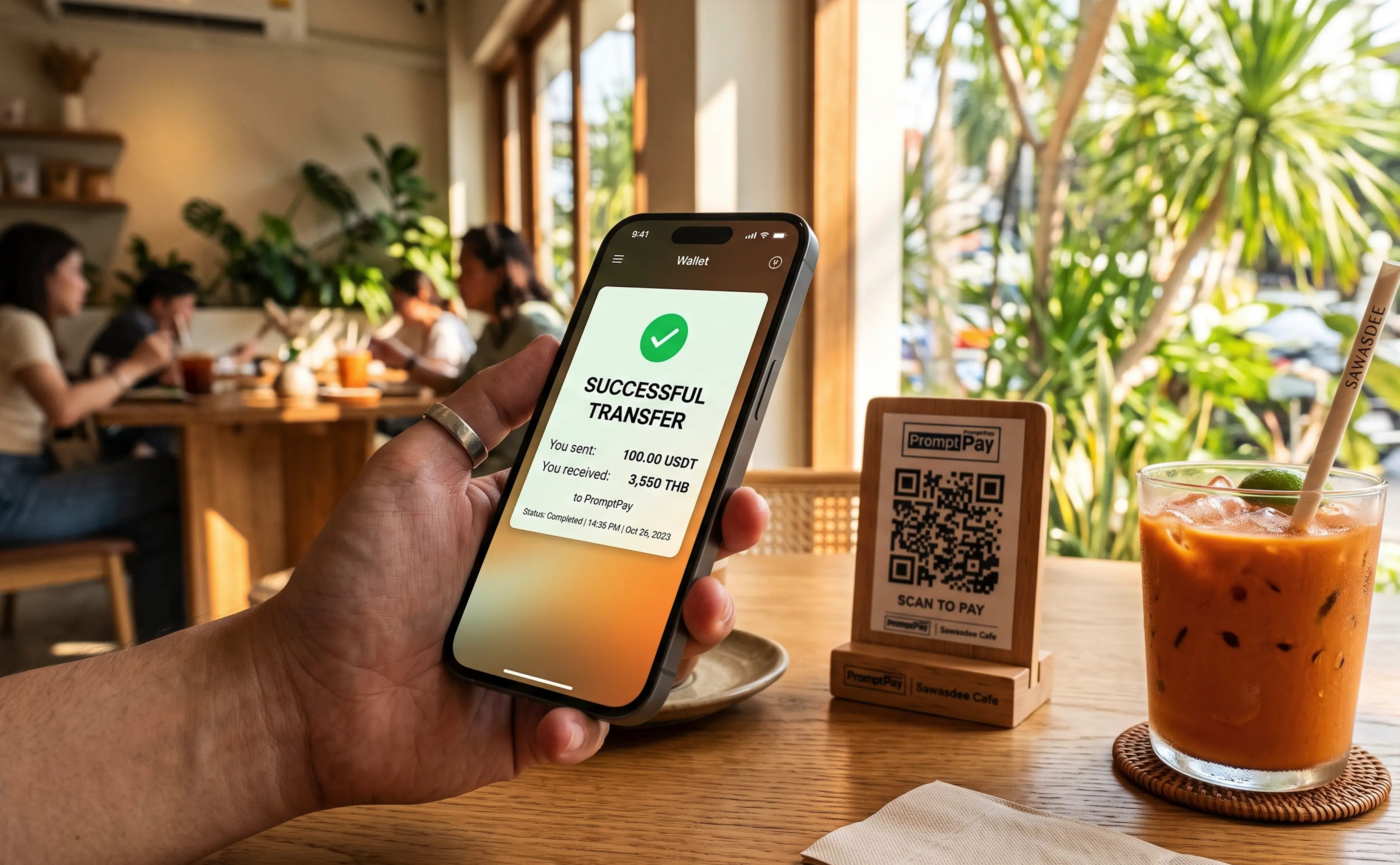
While cash remains king in many local Thai markets, the digital payment landscape has exploded in recent years. Today, approximately 45% of transactions in Thailand are conducted in cash, but digital wallets, QR codes, and alternative payment apps are rapidly taking over hotels, convenience stores, and shopping malls.
The QR Code Revolution: PromptPay
If you spend any time in Thailand, you will see QR codes on every counter, from high-end boutiques to street food carts. The backbone of this system is PromptPay. This government-backed initiative allows instant, fee-free transfers between Thai bank accounts. While incredibly convenient for locals and expats with Thai bank accounts, tourists without a local account cannot use PromptPay directly.
Digital Wallets for Tourists and Expats
For visitors from specific regions, digital wallets offer a seamless cashless experience:
- WeChat Pay & Alipay: Ubiquitous in tourist areas. Thanks to a massive influx of Chinese tourists, nearly all major retailers, including 7-Eleven and King Power duty-free shops, accept these platforms.
- TrueMoney Wallet: One of Thailand's most popular local e-wallets. While primarily aimed at locals, expats with long-term visas and Thai phone numbers can register and use it at 7-Eleven and various online merchants.
- Rabbit LINE Pay: Integrated directly into the popular messaging app LINE, this method is widely used for BTS Skytrain tickets, utility bills, and retail purchases.
"The shift towards a cashless society in Thailand accelerated drastically post-2020. However, tourists often find themselves stuck between sophisticated local banking systems they cannot access and high fees on international credit cards."
Crypto and P2P Exchanges: The Nomad's Choice
For digital nomads, remote workers, and expats, bringing large amounts of cash or paying exorbitant bank fees on international cards is no longer necessary. Alternative solutions, such as peer-to-peer (P2P) crypto exchanges, have become the standard.
By using platforms like MyCashTrack, visitors can instantly convert USDT or foreign fiat (like Rubles or Euros) into Thai Baht. The funds can be sent directly to a Thai friend's account, handed over in cash via courier, or withdrawn from a local ATM without needing a card. This bridges the gap between international digital assets and the local cash-heavy economy.
While cashless is the future, having a reliable source of physical Thai Baht is still essential for taxis, local markets, and rural travel. Always plan a hybrid payment strategy when visiting the Kingdom.