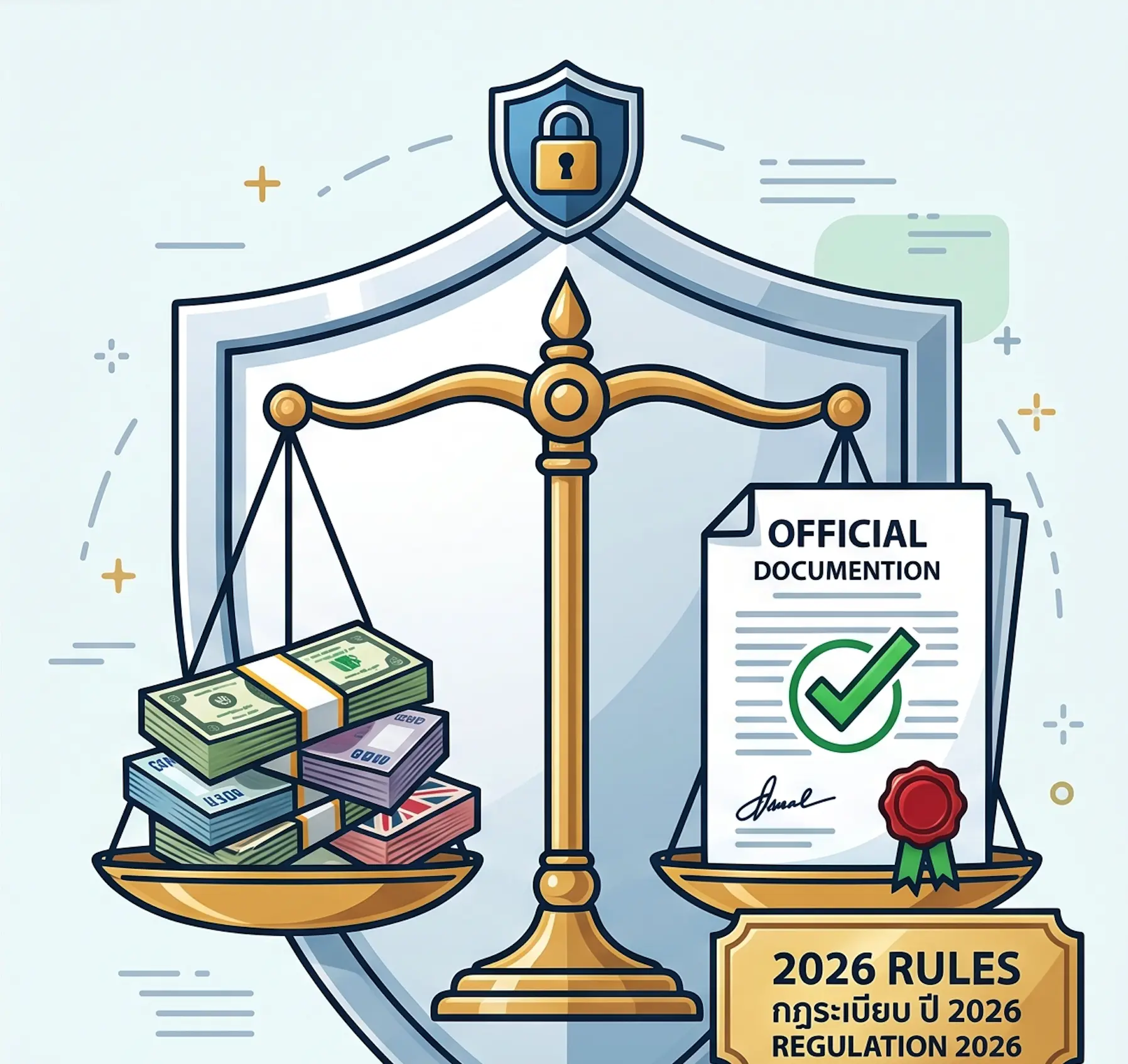
Whether you are relocating to Thailand, buying property, or simply arriving for a luxury vacation, understanding the customs regulations regarding cash is critical. The Thai government has strict anti-money laundering (AML) laws. Failing to comply can result in severe fines, confiscation of funds, and legal trouble. Here is the definitive guide to cash limits and customs declarations in Thailand for 2026.
Bringing Foreign Currency INTO Thailand
A common misconception is that there is a hard cap on how much money you can bring into the country. This is false. There is no maximum limit on the importation of foreign currency (USD, EUR, RUB, etc.). However, there is a strict declaration threshold.
- Under $20,000 USD (or equivalent): You can walk through the Green Channel (Nothing to Declare) without any paperwork.
- $20,000 USD or more: You MUST declare this amount to a customs officer at the Red Channel upon arrival. You will need to fill out a passenger declaration form detailing the exact amount and the origin of the funds.
Warning: Never attempt to split large sums among family members to bypass the $20,000 limit per person. Customs officials are trained to spot this, and it is viewed as structured smuggling.
Rules Regarding the Thai Baht (THB)
The Bank of Thailand tightly controls the movement of its national currency to prevent capital flight and protect the economy. The rules for THB are different from foreign currencies:
- Importing THB: You may bring in up to 500,000 THB without declaration. Anything above this requires authorization.
- Exporting THB: You are only allowed to take up to 50,000 THB out of Thailand without a declaration. The only exception is if you are traveling to bordering countries (Laos, Myanmar, Cambodia, Malaysia, Vietnam), where the limit is raised to 2,000,000 THB.
The Risks of Failing to Declare
If you are caught carrying undeclared cash exceeding the limits, Thai Customs has the authority to confiscate the funds. Furthermore, even if you manage to bring undeclared cash into the country, you will face severe problems later. To buy real estate or deposit large sums into a Thai bank, you must prove the legal origin of the funds. A stamped customs declaration form acts as this proof. Without it, your money is essentially "dead weight" in the formal economy.
A Safer Alternative to Bulk Cash
Carrying tens of thousands of dollars through airports is inherently risky. Security concerns aside, you are at the mercy of physical currency exchange booths.
Instead of navigating customs declarations, many expats and property buyers now utilize digital assets and P2P exchange networks. By using services like MyCashTrack, you can transfer your funds digitally (via USDT or bank wire from your home country) and receive legal, clean Thai Baht directly into a Thai bank account or via secure physical delivery. This completely bypasses the risks of physical borders, customs interrogations, and the stress of carrying a briefcase full of cash.